Sprunki All Phases Beat Maker
- 4.7
- Rating
- 10.00M
- Installs
- Free
- Price

 Analysis by App-foxy
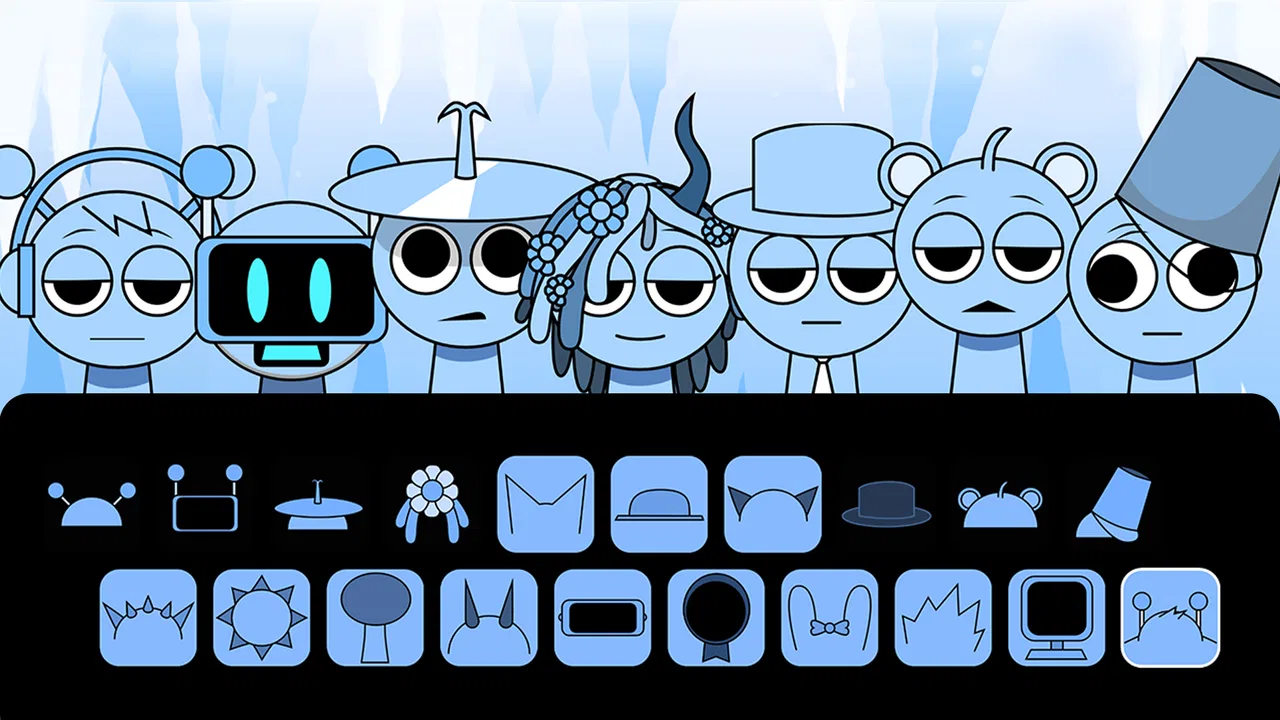
I spent time with Sprunki All Phases Beat Maker as a light music-making game rather than treating it like a full digital audio workstation. That distinction matters. The appeal is immediate: you arrange playful beat, vocal, and effect elements, listen to the result, then keep adjusting until the mix feels right. It is easy to approach casually, but there is enough room for experimentation to make a short session feel more personal than simply tapping through a conventional arcade game.
Gotstar Studio presents it as a free casual game for everyone, and that description fits my experience. I did not need music theory to understand the basic idea. The main pleasure comes from hearing combinations change the character of a track, moving between a simple groove and something busier or stranger. If you enjoy experimenting with sound but do not want the technical barrier of a traditional music app, this is the kind of game that makes sense.
The audience response is also notable: it holds a 4.9 average from around 2.2 thousand ratings and has passed 10 million installs. Those figures suggest that the simple beat-making concept has reached far beyond a tiny niche. Still, popularity does not automatically make it the right choice for everyone. I found its strongest qualities in quick creative play, while its limitations become clearer when you want detailed control, serious recording, or a clearly explained progression system.
You May Also Like

 Blood Strike: 2.5 Anniversary
Blood Strike’s Loadouts Turn Every Drop Into a Tactical Gamble
A close look at Blood Strike’s custom loadouts: how fast access to signature weapons reshapes its battle royale rhythm, rewards preparation, and narrows the gap between fights.

 Pandora - Music & Podcasts
Pandora’s Music Is Easy to Start, but Harder to Recover
Pandora’s strength is its low-effort path from a seed to a station. Its weak spot is how much confidence it asks you to place in connection, setup, and quiet recovery.

 8 Ball Pool
 Is Built on Rivalries, Rematches, and Routine
A close look at the rivalries, rematches, shared routines, and unanswered safety questions that turn a quick pool match into a persistent mobile community.

 Samsung Music
’s Quiet Strength Is Playing What You Already Own
Its reach comes less from spectacle than from dependable access to a personal library. That simplicity is both the app’s strongest retention engine and its ceiling.

 AccuWeather: Weather Radar
AccuWeather Review: A Quick, Clear Forecast for Everyday Decisions
For everyday plans, the best forecast is the one you can understand quickly. AccuWeather makes rain timing, radar, and local conditions easy to act on, with a few trade-offs.

 Hill Climb Racing
Why Hill Climb Racing Still Turns Crashes Into One More Run
A tiny car, a bumpy hill and one more upgrade: Hill Climb Racing keeps resurfacing because its simple chaos makes every near-miss feel personal.
More From Our News Desk



How the beat-making experience works in everyday play
When I think about how this game fits into an ordinary day, its appeal is less about finishing a song and more about having a quick space to try out musical ideas. I’d use a brief session to test one change at a time and notice how it shifts the mood, rather than piling on layers just to make the mix busier. That leads naturally to the practical question of how the experience feels when I spend longer experimenting.
A friendly starting point for sound experiments
The first thing I appreciated was how little pressure the concept creates. Instead of asking me to build a song from a blank timeline, the game encourages a more direct form of arrangement. I could focus on whether a vocal layer matched the beat, whether an effect made the section more interesting, and whether the overall combination sounded balanced to my ears.
That makes it a useful choice for someone who has never opened a music-production app. In a conventional workstation, the number of tracks, controls, menus, and technical terms can make the first few minutes feel like homework. Here, the attraction is more immediate. I could make a change, hear its effect, and decide whether to keep it without first learning a complicated editing language.
It is also suitable for short breaks. A realistic use case is a commute or a few quiet minutes after school or work: I can create a rough arrangement, listen to it several times, and stop without feeling that I abandoned a large project. That low commitment is one of the game’s biggest strengths. It treats music-making as play, not as a task that requires a dedicated desk and a long uninterrupted session.
Why the “all phases” idea changes the rhythm of play
The all-phases focus gives the experience a broader identity than a single loop toy. I approached the different phases as opportunities to change the mood and density of a composition rather than simply searching for one perfect combination. A quieter arrangement can work as a starting point, while later experimentation can add more movement and personality.
A useful habit is to begin with fewer elements than I initially want. When every available sound is added immediately, it becomes harder to tell which part is helping the arrangement and which part is making it crowded. Starting with a basic beat, then introducing a vocal component, and finally testing effects makes the differences easier to hear. This is a small workflow change, but it produces more deliberate results than random tapping.
I also found value in comparing the same core idea across phases. Rather than treating each phase as a completely separate attempt, I could use one arrangement as a reference point and notice how the atmosphere changed. That makes the game more interesting for repeat visits because the goal is not only to unlock or finish something; it is to understand how a different sound combination affects the whole piece.
Where it differs from ordinary casual games
Most casual games are built around matching, timing, collecting, or reaching a score. This one is more open-ended. There is no single correct-sounding result for my personal taste, so the reward comes from discovery. I can make something energetic, odd, sparse, or deliberately messy and still feel that the session had a purpose.
That freedom is also the reason some players may find it less compelling than a structured puzzle game. If you need clear objectives, frequent achievements, or a strong sense of winning and losing, the creative format may feel loose. I would recommend it to someone who enjoys tinkering, not to someone expecting a rhythm game with demanding note patterns or a campaign with tightly defined missions.
Progress without turning the session into a chore
The most comfortable way to use it is to treat each session as a small experiment. I would not approach it expecting a long-term progression ladder comparable to a large role-playing game. Its value is in revisiting combinations, refining an arrangement, and finding a sound that feels satisfying in the moment.
That approach also reduces frustration. When I judged every attempt as something that had to become a finished song, the experience felt narrower. When I treated failed combinations as useful tests, the game became more relaxed. A harsh effect or an awkward vocal layer is not wasted if it teaches me what to avoid in the next arrangement.
For parents and younger players, the Everyone rating makes the premise approachable, but I would still encourage adults to look at the purchase settings on the device before handing it over. The game is free to start, while in-app purchases are listed at $3.99 per item. That is a concrete spending point worth understanding before a child experiments freely with any purchase prompt.
Spending, pressure, and what I would watch
The free entry point is helpful because it lets a new player decide whether the sound-based format is enjoyable before paying anything. I could evaluate the basic appeal without committing money at the start. That is a better arrangement for curious users than a paid download that offers no chance to test the style first.
At the same time, the purchase model means I would not describe the game as automatically cost-free in practice. The listed price of each in-app item is clear, but the available purchase content and its effect on the experience are not explained in the facts available to me. I would therefore avoid buying simply because a prompt appears. I would first decide whether the item adds something I genuinely want, rather than assuming it is necessary for progress or better music.
This is especially important in a creative game because pressure can be subtle. A player may feel that a track is incomplete without an extra sound, phase, or effect even when the free experience is already enjoyable. My advice is to make a few arrangements first, learn what the basic toolset can do, and only then consider spending. That keeps the decision connected to actual use instead of impulse.
Does spending create an unfair advantage?
I did not find a verified basis for calling the game competitive in the usual multiplayer sense, and I would not judge it like a head-to-head action title. Its central activity is personal arrangement, so the most meaningful comparison is whether purchases affect creative access rather than whether they produce a stronger combat or leaderboard position.
Because the purchase catalog and progression effects are not fully described here, I would not promise that spending is irrelevant. I can say that the game’s main appeal is expressive rather than competitive: the goal is to shape a sound you like, not to defeat another player with a paid advantage. If you are specifically looking for a guaranteed pay-free competitive environment, this is not the app I would choose without first checking the current purchase flow yourself.
For casual use, the practical fairness question is simpler: can I enjoy making arrangements before paying? The free starting point suggests that a player can at least try the core concept first. That is enough for me to recommend testing it, but not enough to claim that every later option is equally available without spending.
What remains unclear before downloading
A few questions deserve honest caution. The game is identified as version 0.4.4 and supports devices running Android 7.0 or later, but a version number alone does not tell me how frequently the experience changes or which improvements are planned. I would treat it as an evolving casual game rather than assuming that the current structure is final.
I would also avoid expecting the features of a professional music editor. The store summary centers on beats, vocals, and effects across its phases, which tells me the creative direction, but it does not establish advanced recording, detailed waveform editing, file export, collaboration, or studio-grade mixing. If those functions are essential to you, a dedicated music-production app is the safer alternative.
Another practical unknown is how much long-term variety comes from the available sound combinations. The concept encourages replay, but the lasting value depends on whether the phases and elements continue to feel distinct after the novelty fades. I found the experimentation appealing, although players who need a large stream of new challenges may eventually prefer a rhythm game with a more formal content schedule.
Who should install it, and who should skip it
I would recommend it to casual players who like sound-based creativity, fans of playful character-driven music concepts, and beginners who want to make something without studying a complicated interface. It is also a good fit for families looking for an approachable creative activity, provided purchase controls are handled responsibly.
I would be more hesitant to recommend it to musicians who need precise tempo editing, multitrack recording, notation, mastering tools, or dependable project management. A conventional beat-making app will be better for those needs. Likewise, if your priority is competition, measurable skill progression, or a campaign with explicit goals, a rhythm or puzzle game may give you a stronger sense of direction.
The most useful middle ground is to see it as a sketchbook for musical ideas. I can test a mood, build a short loop-like arrangement, and learn which layers work together. I would not use it as the final production environment for a song I intended to release, but I could use it to explore a concept before moving to a more technical tool.
My trust verdict after weighing the free start and paid items
My overall view is positive, with sensible limits. Gotstar Studio has made a casual game that lowers the barrier to playful music creation, and the strong average rating plus wide install base show that the idea has connected with many users. I enjoyed the way a few deliberate changes could transform an arrangement without demanding specialist knowledge.
The important qualification is spending. The game is free, but individual in-app purchases cost $3.99 each, so I would approach optional content carefully and avoid assuming that paying is required. The available facts do not justify stronger claims about purchase pressure, competitive advantage, or exactly what each item unlocks. That uncertainty is a reason to stay attentive, not a reason to dismiss the game.
My recommendation is to try it as a relaxed creative toy, not as a full music studio or a serious competitive game. Start with a minimal arrangement, compare how the phases alter its mood, and decide whether the free experience already gives you enough room to play. If you want quick experiments with beats, vocals, and effects, it is an easy game to suggest to a friend. If you need technical control or a clearly documented progression path, choose a more specialized alternative instead.
FAQs for Sprunki All Phases Beat Maker
01What is Sprunki All Phases Beat Maker?
Sprunki All Phases Beat Maker is a versatile music production app designed for both beginners and experienced musicians. It allows users to create beats with a wide range of sounds and effects. The app is available for Android and iOS, and offers an intuitive interface for crafting high-quality music tracks.
02Is Sprunki All Phases Beat Maker suitable for beginners?
Yes, Sprunki All Phases Beat Maker is beginner-friendly. It features an easy-to-navigate interface with tutorials and guides to help new users get started. The app simplifies complex music production processes, allowing anyone to create professional-sounding beats without needing prior experience.
03What features does Sprunki All Phases Beat Maker offer?
Sprunki All Phases Beat Maker offers a robust set of features, including a wide variety of sound packs, real-time effects, and a multi-track mixer. Users can also benefit from built-in sharing options and cloud storage, making it easy to collaborate and save projects securely. Regular updates ensure fresh content and enhancements.
04Are there any in-app purchases in Sprunki All Phases Beat Maker?
Yes, while Sprunki All Phases Beat Maker is free to download, it offers in-app purchases. These include additional sound packs, effects, and advanced features that enhance the music-making experience. Users can choose to purchase these individually or as part of a subscription model for full access.
05Can I export my projects from Sprunki All Phases Beat Maker?
Absolutely, Sprunki All Phases Beat Maker supports exporting your music projects in various formats such as MP3 and WAV. This feature allows you to share your creations on different platforms or incorporate them into other projects seamlessly. The app ensures high-quality audio output for all exported tracks.
Pros
- Intuitive interface for easy navigation.
- Wide range of sound samples available.
- Real-time collaboration with others.
- Customizable beat patterns and loops.
- Regular updates with new features.
Cons
- Limited export formats for created tracks.
- In-app purchases can be pricey.
- Occasional lag on older devices.
- Some features require internet access.
- Ads can be intrusive in free version.

Sprunki All Phases Beat Maker
Gallery